What More Than Four Decades in Addiction Treatment Have Taught Me
Addiction treatment has changed over the past four decades, but individuals and families still face the same difficult question: What actually helps a person recover?
Billy Young has spent his career working through that question, first through his own recovery and then from nearly every level of the treatment field. He began as a counselor and later served as a clinical director, program leader, owner, and CEO of residential and outpatient behavioral healthcare organizations in several states. Today, he is co-owner and managing partner of Plum Creek Recovery Ranch.
At Plum Creek, Billy remains close to the daily work of treatment. He supports the leadership team, spends time with patients and staff on campus, and advises on decisions about the program, its people, and the ranch itself.
In this conversation, Billy reflects on the path that brought him into addiction treatment, what decades in the field have taught him, and the principles he believes give people the strongest opportunity to build lasting recovery.
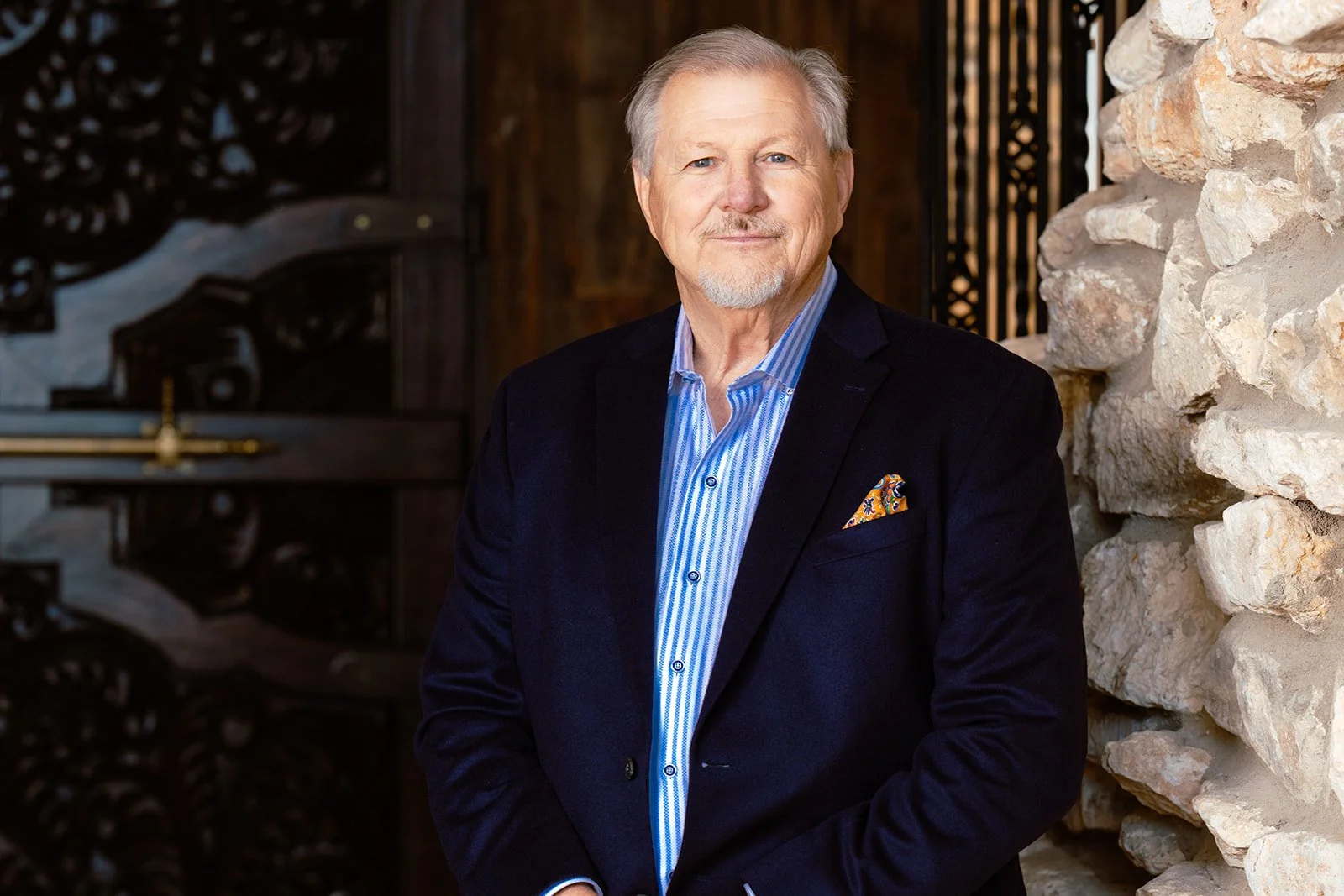
Plum Creek Recovery Ranch Managing Partner and Co-Owner Billy Young
How did you start working in addiction treatment?
My own addiction and recovery are what led me into this work. I was still in active addiction when I graduated from Murray State University in 1975.
By the time I entered treatment in 1980, I was essentially unemployable. I had no money, no car, no real work history, and a criminal record. When somebody asked for a résumé, about all I could give them were jail dates.
The treatment center where I entered recovery gave me an opportunity when I did not have many others. I started working there as a counselor and went through the process to become a certified alcohol and drug abuse counselor. That was the beginning of my career.
Early recovery taught me accountability in a very practical way. I had to show up, tell the truth, accept responsibility, and learn how to be useful to other people. When I got married and had children, that changed things again. I was no longer responsible only for myself. Those lessons still shape how I think about treatment today.
What brought you to Central Texas?
Family is what brought me here.
The physician team leading my granddaughter’s healthcare moved to Texas, and I wanted to be nearby to support her and her parents.
Once I began spending time here, I saw that Central Texas had a strong treatment and recovery community. I started asking the same question I have asked throughout my career: How can we create a recovery-based treatment center with a culture we believe in and an approach that we know works?
Plum Creek gave us an opportunity to build that kind of resource for this area.

Experiential work, such as equine therapy, and open land give patients room to heal beyond the traditional therapy room.
What made Plum Creek the right opportunity for you?
When I first saw the ranch, I saw the potential of the setting. It is a 200-acre working ranch with open land, a converted mansion, trails, and room to keep developing the campus. It gives people space to step away from the pressures and distractions of daily life, get outside, and become active participants in treatment.
The property and the existing infrastructure fit with what I have seen work over the course of my career. You can use the outdoors. You can use movement. You can incorporate equine work and other experiential therapies alongside strong clinical care.
Recovery cannot happen only through sitting in a room and talking. People need opportunities to engage, practice different behaviors, and experience themselves in a different way. The ranch gives us room to do that.
What is your role at Plum Creek, and how do you spend your time on campus?
My role as co-owner and managing partner is to support the leadership team with the knowledge and experience I have gained over the years.
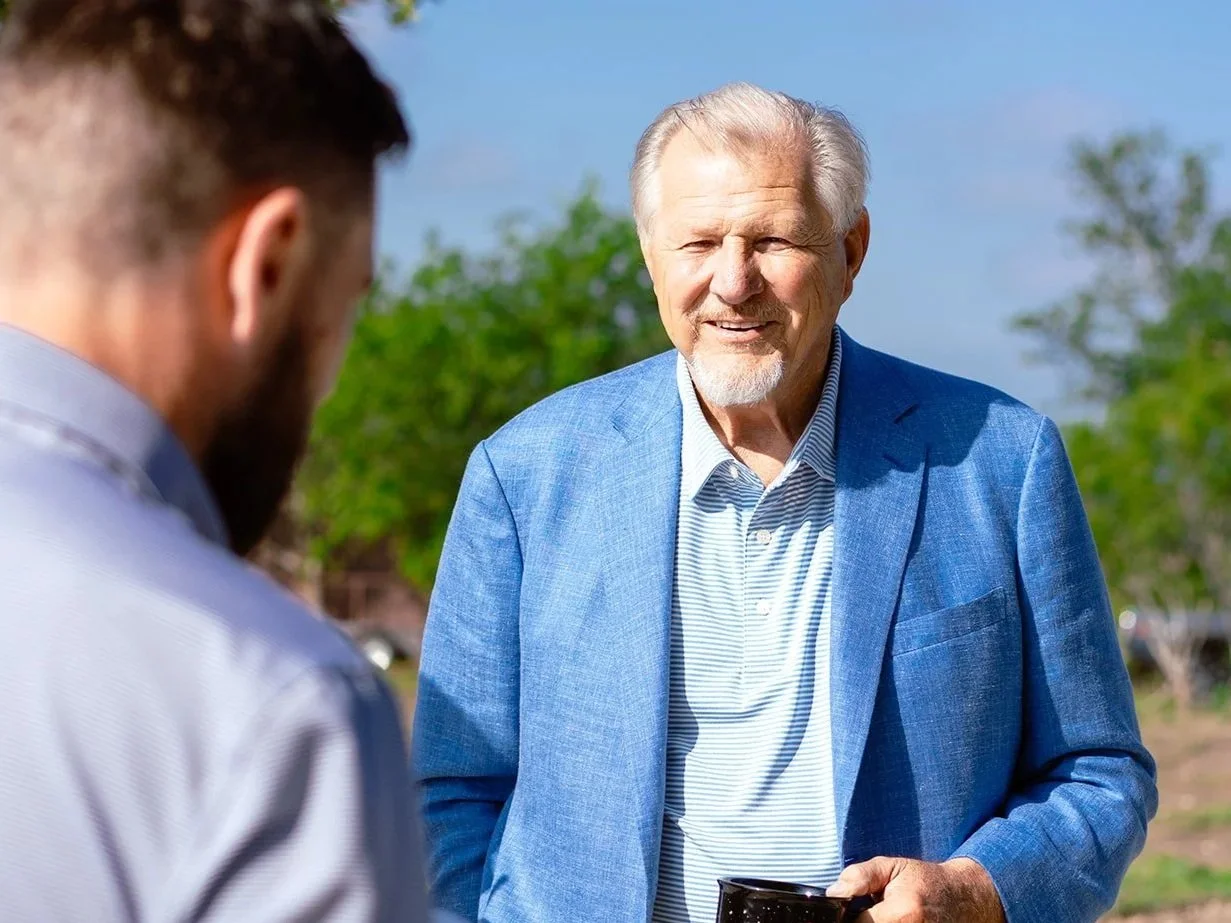
Billy Young welcomes visitors during a gathering on the ranch.
First and foremost, I try to be present. When I am on campus, I make it a point to eat lunch in the cafeteria. I spend time around patients and staff, and I talk with people across departments.
We do not have a large corporate structure sitting above the ranch, so we can have conversations and make decisions here. It does not matter if someone is a driver, a dietary employee, a therapist, or a nurse. They can walk up, sit down, and talk with me. They do not need an appointment. Everyone just calls me Billy.
Our employees are our most important asset. They are the people doing the work every day. My job is to make sure they see and feel that they are supported and have what they need to care for patients.
What qualities did you look for when building a leadership team?
Knowledgeable. Experienced. People who understand addiction treatment and know the Texas treatment community.
I sought out people who are respected, connected, willing to work hard, and committed to doing the job well. That may sound simple, but it matters.
The only way you become a center of excellence is by providing really good treatment services to patients, families, and referral sources. You do that consistently, over time. That is how you earn a reputation.
I want leaders who have the knowledge, experience, and ability to do that. That’s it.
What has your career taught you about helping people recover?
One thing I have learned is that people in the throes of addiction connect with authenticity. They may not be able to process everything being said to them at that moment, but they can tell whether you are genuine.
That means the culture has to support honest, open, and direct communication. If the staff and the program are not authentic, patients will know it.
I have also come to understand addiction as a generational disease. People do not become addicted in a vacuum. Genetics, learned behaviors, and unresolved grief can all be part of it. That is why family involvement matters. You have to look beyond the individual and understand the larger family system.
People also need time and structure to begin practicing a different way of living. Understanding the problem is one thing. Recovery has to become part of what a person does every day.
You often describe addiction as a “hijacked brain.” Why is that concept central to your work?
A person does not usually enter treatment because they are “ready.” They enter because the consequences have brought them to a point where they are thinking, “I have to do something. If I do not do something, something bad is going to happen to me.”
Even after they enter treatment, the hijacked brain is still there saying, “Just one more time.”
I describe the progression as denial, self-delusion, and impaired judgment. Self-delusion is when I begin to believe something that is not true. I may truly believe I can stop whenever I make up my mind, even when there is overwhelming evidence that I cannot.
That thinking also tells the person, “I do not need to stay in treatment that long. I do not need to do everything people are asking me to do. I am the exception, not the rule.”
Staff members have to understand that addiction is resistant to the very treatment that can help the person get better. When we recognize that, we can maintain clear boundaries, hold people accountable, and still respond with patience and empathy. We do not have to take the resistance personally.
You previously co-founded a network of outpatient mental health clinics. How did that experience shape your view of co-occurring conditions?
My work in outpatient mental health gave me a deeper understanding of how anxiety, depression, OCD, and other mental health conditions affect people’s lives. Many patients with addiction also have co-occurring conditions, and those conditions need to be evaluated and treated.
Number one, however, we have to treat the addiction and help the patient establish abstinence. Active substance use can make it difficult to determine what is an underlying mental health condition and what is being caused or intensified by the substance use.
As the patient begins to stabilize, the clinical team has a clearer picture. Then we can address both appropriately.
What are your main priorities for Plum Creek moving forward?
Number one is continuing to grow and expand our family services.
Addiction is a generational illness, so we have to address it with families, not only with patients. We want families to understand the disease, participate in treatment, and begin looking at the patterns that have developed throughout the entire family system.
Another priority is strengthening our continuum of care. We want patients to have the structure and support they need as they move through treatment and into the next stage of recovery.
We also have to maintain clinical integrity and create opportunities for our staff to grow. That includes advancement, clinical training, and clinical supervision. A strong program depends on good people, and we need to give those people opportunities to continue developing professionally.
On campus, we are building a new equestrian center and expanding our trails and other outdoor resources so experiential work can become an even stronger part of treatment. Those investments give patients more ways to engage in treatment, practice new behaviors, and participate in their own recovery.
How do you practice your own recovery today?
I have been actively involved in 12-step recovery since I entered treatment in 1980.
One of the principles I learned early — and I did not develop it myself, it was taught to me — is to maintain the attitude and spirit of being a giver rather than a taker. Giving to other people exemplifies the 12-step program of recovery, and it remains a big part of how I practice recovery today.
I also make time for my family and the things I enjoy. I love to fly fish, and I got into scuba diving about 15 years ago. Those things give me a chance to step away and maintain some balance.
Learn more about addiction treatment at Plum Creek Recovery Ranch
To learn more about Plum Creek's treatment philosophy and how we help patients work toward long-term recovery, contact our Admissions team.