How Experiential Therapy Helps People Recover From Addiction
By Dale Phillips, Director of Experiential Therapy
When people hear the word “therapy,” they usually picture sitting in a room and talking. Talk therapy is an essential part of recovery. But addiction does not live only in thoughts or beliefs. It shows up in the body, in stress responses, reflexes, habits, and patterns that kick in before a person has time to think.
Experiential therapy is designed to work at that level.
At Plum Creek Recovery Ranch, experiential therapy is a core part of treatment. It is not an add-on or an activity meant to make treatment more comfortable. It is a structured, clinically guided approach that uses movement, responsibility, and hands-on work to help regulate the nervous system, interrupt old patterns, and support the deeper work happening in individual and group therapy.

Dale Phillips, Director of Experiential Therapy, at Plum Creek Recovery Ranch.
Addiction Is More Than a Thought Pattern
Over years of working in addiction treatment, I have seen a consistent pattern. People often understand exactly what they need to change, but still feel unable to do it. They can talk clearly about consequences, motivations, and goals — and then find themselves reacting in the same ways when stress, conflict, or fear shows up.
That is because addiction reshapes how the brain and nervous system respond to the world. Long after someone stops using drugs or alcohol, the body may still be operating as if it is under threat. The stress response stays switched on. Impulse control drops. Old reactions take over before reasoning has a chance.
Talk therapy helps people understand what is happening. Experiential therapy helps them feel and practice something different.
Hear Dale and other Plum Creek leaders describe how experiential therapy helps break through barriers in treatment.
How Experiential Therapy Works in the Body
Experiential therapy engages the body directly through movement, task, and responsibility. That might mean working with horses, caring for animals, or completing structured work outdoors. These activities are not random. They are chosen and supervised with intention.
When someone is physically engaged, their nervous system has a chance to settle. They move out of fight-or-flight and into a state where learning and reflection are possible. From there, people can practice regulating emotions, setting boundaries, tolerating discomfort, and responding instead of reacting.
In simple terms, experiential therapy helps bridge the gap between insight and action. It is the difference between reading a map and walking the trail.
What Experiential Therapy Actually Looks Like at Plum Creek
At Plum Creek, experiential therapy is woven into daily life. It is not about performance or doing something “right.” It is about paying attention to how a person shows up, how they respond to pressure, frustration, feedback, or uncertainty, and then working through those moments in real time.
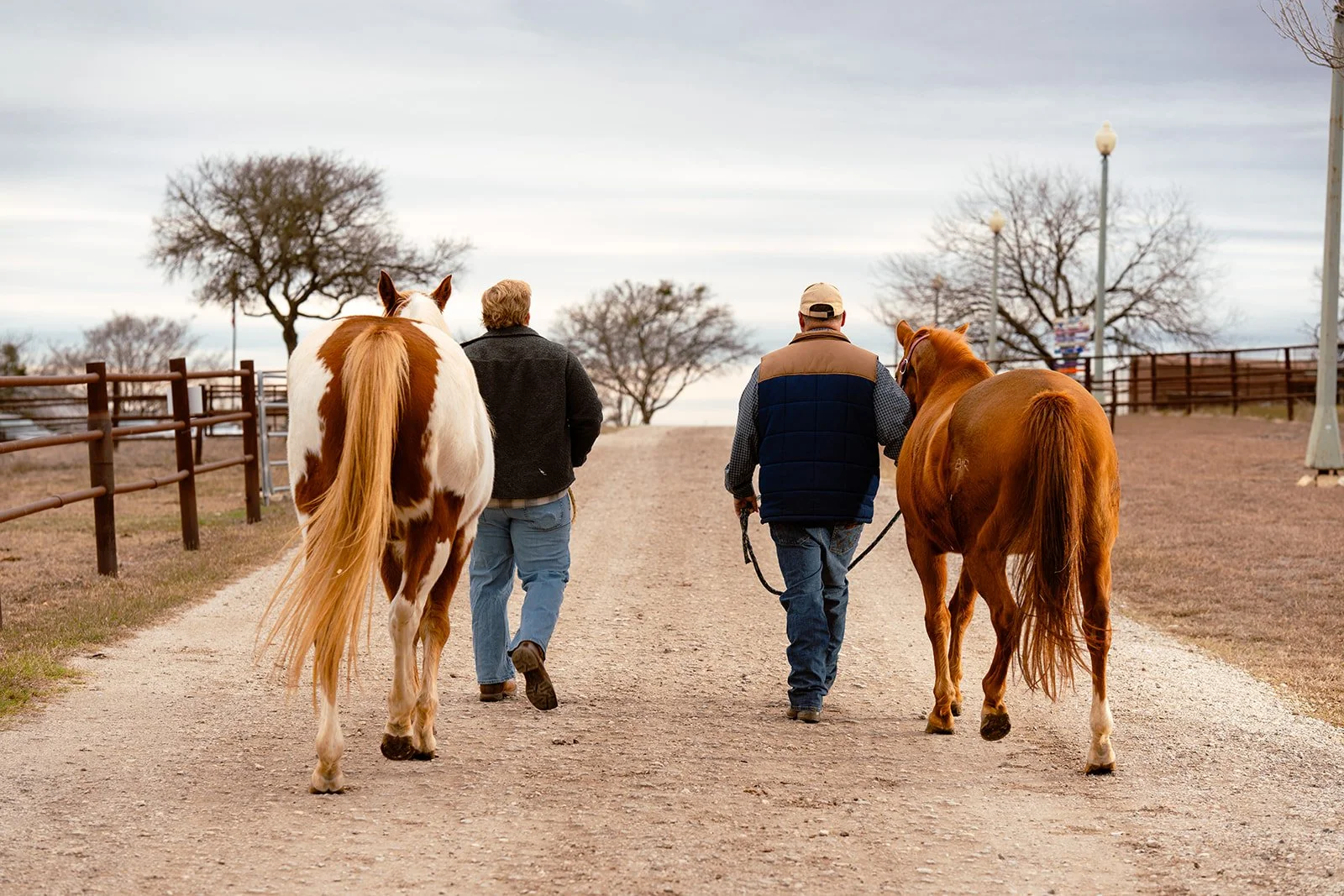
The land itself is part of the process. Movement, routine, and responsibility create opportunities for patterns to surface naturally. Those experiences then connect back to what is happening in therapy sessions, giving people concrete examples to work with rather than abstract ideas.
This approach allows treatment to reach places that words alone often cannot.
Why Horses Are Such Powerful Teachers
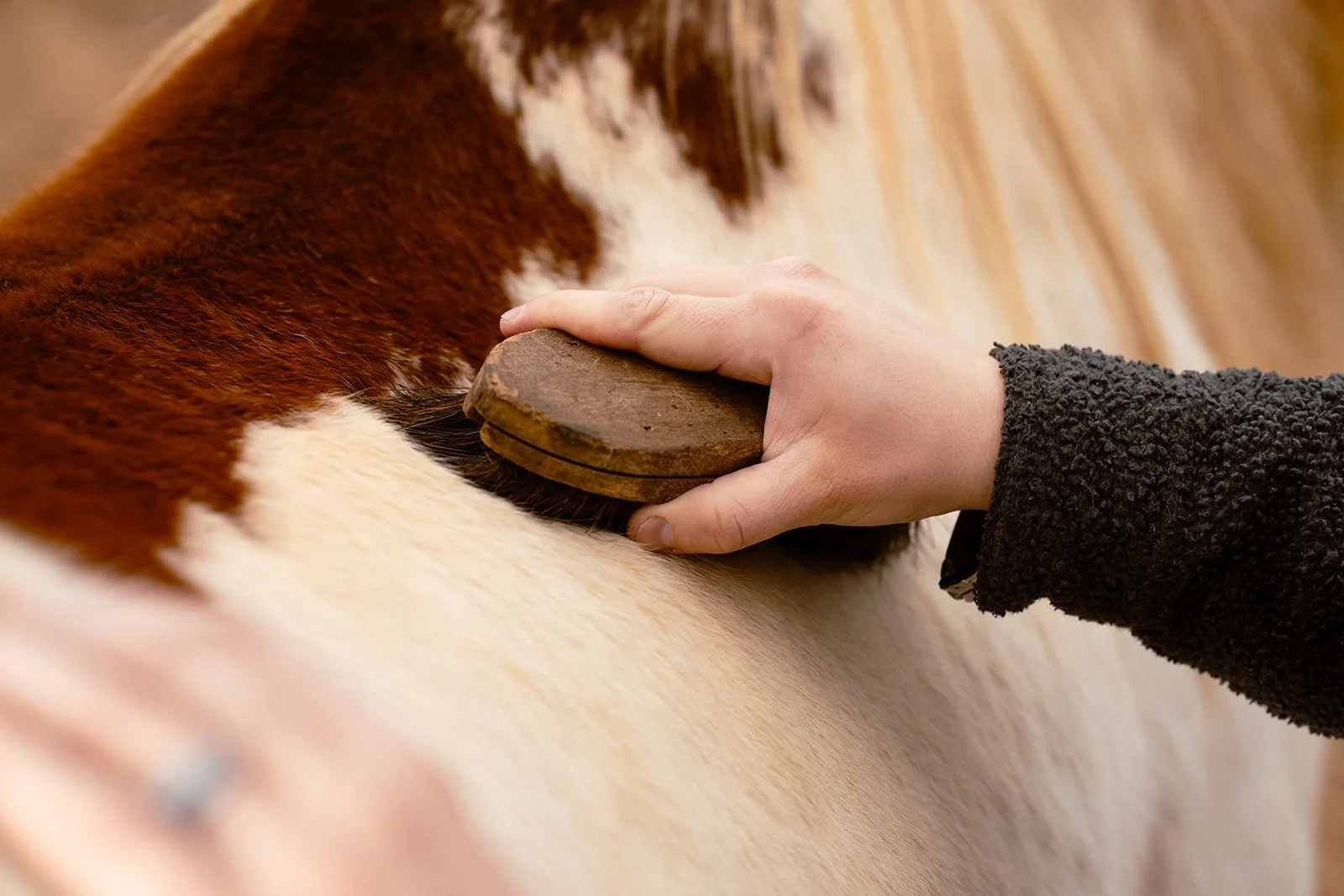
Horses are especially effective in experiential therapy because they respond honestly to what is happening in the moment. They do not respond to explanations or intentions. They respond to presence, energy, and consistency.
I once worked with a woman who was struggling to engage in treatment. She had been through significant trauma and kept people at a distance. She found a connection with one of our horses that had been neglected and was covered in brands. She did not need to explain her pain to him, she knew he understood. She eventually started talking to him, and that was the first time she had opened up in years.
That moment opened a door. It gave her a felt experience of how her internal state affected her relationships, something she had struggled to grasp in conversation alone.

Discipline, Structure, and Responsibility Matter
Experiential therapy is not about escape or self-discovery. It is about discipline and consistency. Showing up when you do not feel like it. Completing tasks even when they are uncomfortable. Learning that effort and follow-through matter.
At Plum Creek, experiential therapy is designed to reinforce these lessons in practical ways. People learn that their actions have consequences, not as punishment, but as reality. Over time, that builds confidence, trust, and a sense of agency that addiction often strips away.
Experiential Therapy as Part of Whole-Person Treatment
Experiential therapy does not replace talk therapy. It strengthens it.
When people can regulate their bodies, therapy becomes more effective. Emotional insight deepens. Patterns discussed in session show up clearly in daily life, where they can be addressed and practiced.
This integrated approach treats addiction as what it is, a condition that affects both mind and body. Healing requires attention to both.
Why This Matters for Long-Term Recovery
Recovery is not just about stopping substance use. It is about learning how to live — how to handle stress, conflict, responsibility, and connection without shutting down or reaching for escape.
Experiential therapy helps people practice those skills in a real, grounded way. It gives them a chance to experience themselves differently, often for the first time in years.
At Plum Creek Recovery Ranch, experiential therapy is one of the ways we help people rebuild from the inside out, steady, supported, and grounded in what actually works.
If you are considering treatment, our admissions team can walk you through what experiential therapy looks like day to day and help you determine next steps.